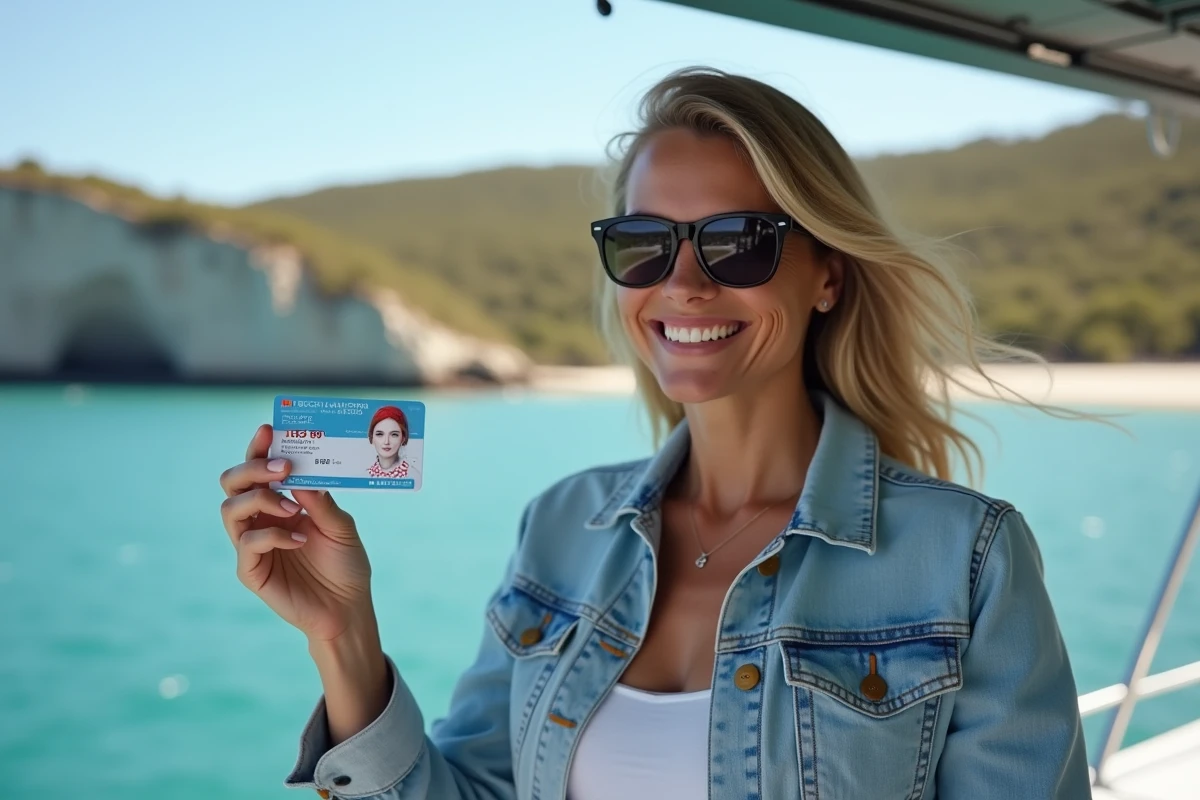
A French boat license does not always carry the same weight under the Australian sun as it does in the Mediterranean or on the Seine. In Australia, the recognition of foreign licenses depends on each State or Territory, with no national harmonization. A holder of a French boat license may be allowed to navigate in certain areas, while elsewhere, a conversion or prior declaration is required.
The absence of a unified framework forces foreign boaters to check local requirements, which can vary even between neighboring coastal areas. Additional administrative procedures may be required, including the official translation of the license or the presentation of an international certificate.
French boat license in Australia: what recognition to expect?
Navigating under the French flag in Australian waters quickly confronts a reality: the French license does not automatically open all doors. Local authorities do not grant any universal recognition, and each State or Territory decides its own rules. As a result, for foreign boaters, the procedures and formalities vary from region to region.
In New South Wales, it is impossible to escape the certified translation of the license. This must be done by a NAATI accredited translator and presented at any inspection, whether for coastal navigation or on rivers. In Queensland, the French license may be sufficient for a maximum period of three months, provided proof of skills is presented, but translation is not always required. Victoria, on the other hand, requires the conversion of the license if navigation extends or if residency exceeds a few weeks; this is not just a simple paperwork check, but a mandatory process through the local administration.
Sometimes, authorities or rental companies require an International Certificate of Competence (ICC). This document, while not always mandated by law, can become essential for renting a boat or reassuring an insurance company. Others accept the French coastal or offshore license, but only if it is accompanied by an official translation, validated locally.
Before embarking, it is therefore necessary to inform oneself about the regulations specific to each State and prepare each document meticulously. To obtain an overview of the validity of the French boat license in Australia and to know the latest developments, the following page offers a reliable reference: French boat license in Australia. Depending on the territory, the procedures evolve, and the slightest approximation can quickly become costly during an inspection, whether offshore or at the dock.
Local regulations: what each Australian State requires from foreign boaters
Navigating in Australia with a license issued in France means accepting to deal with a legislative patchwork. The rules, far from being uniform, apply differently depending on whether one is in the north, south, or east of the country. Maritime authorities expect foreigners to be thoroughly prepared and to pay constant attention to the validity of each document.
Main requirements by region
Here are the main specifics to know before setting sail:
- New South Wales: Any use of a foreign boat license is conditioned on a certified NAATI translation. At each inspection, this document must be presented, and requirements vary depending on whether one is navigating in inland waters or along the coast.
- Queensland: The French license is accepted for short stays (less than three months). However, it is necessary to justify one’s skills, even if the translation of the license is not always systematic.
- Victoria: As soon as navigation becomes regular or if residency exceeds three months, converting the foreign license to a local license is mandatory, after verification of knowledge by the authorities.
The procedures become more complex as soon as one crosses internal Australian borders. Depending on the location, the distinction between coastal and offshore licenses, holding an ICC, or a certified translation becomes prerequisites. Inspections are frequent, and the absence of a single document can abruptly interrupt a cruise.
To navigate peacefully, it is better to anticipate each requirement specific to the State in question and update information just before departure. The compliance of supporting documents is non-negotiable, and vigilance remains your best ally to avoid unpleasant surprises offshore.
Procedures to anticipate and useful resources for smooth navigation
Setting out on Australian waters with a French boat license requires more than just good intentions. You need to gather all original documents: the appropriate French license, an International Certificate of Competence (ICC) if you have one, and proof of ownership or rental of the boat. The NAATI certified translation of the license remains the central document to convince local authorities of your legitimacy at the helm.
When renting a boat or going through an agency, caution is essential: many operators require not only the official translation but also an international insurance certificate, and sometimes a practical test. Contacting the maritime administration of the destination State (New South Wales, Queensland, Victoria) allows you to obtain updated answers on formalities, as regulations evolve regularly. Even on a boat under the French flag, compliance with safety equipment is monitored, even in the most remote waters from France.
To prepare for your navigation, keep these points in mind:
- Insurance: Carefully check the extent of your policy outside the European Union and the acceptance of your French documents by Australian authorities.
- Certified translation: Use a NAATI accredited translator to avoid any disputes during inspections.
- Professional skipper: If doubts remain or to navigate on a sailboat, the support of a local skipper can make all the difference for a smooth crossing.
Renting a boat without a license in Australia is not improvised either. Regulations remain strict, even for modest or low-powered vessels. Every detail counts, from the validity of the license to the compliance of translated documents. In Australia, administrative leniency has no place on the water: it is better to arrive prepared, with documents in order, to fully enjoy the freedom of the open sea.