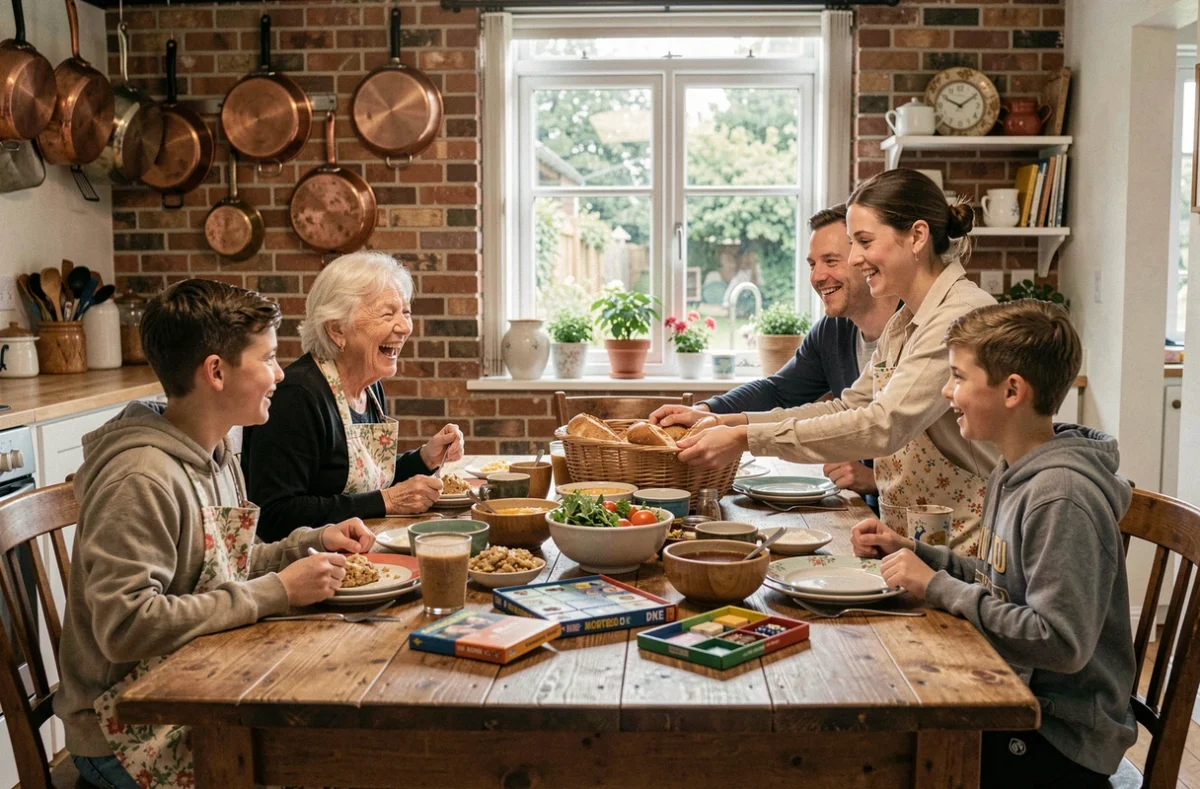
A dinner where everyone talks at the same time, a fit of laughter triggered by a failed grimace, an impromptu walk after school: the family moments that leave a mark in memory require neither budget nor complex organization. They rely on an often underestimated ingredient, the actual availability of parents and children at the same time.
Parental technoférence: the invisible barrier to family moments
Have you ever noticed that a child telling about their day suddenly stops when they see a parent scrolling on their phone? This phenomenon has a name. Santé publique France describes technoférence: the interruption of interactions by an adult’s smartphone, even with a baby.
The usual reflex is to limit children’s screen time. This is useful but insufficient. When a parent checks their notifications during a meal or at the park, they send a clear signal: what happens on the screen takes precedence over what happens at the table.
To create daily memories, it is possible to discover family on Spotrank and rethink one’s own digital habits before regulating those of the children. Putting the phone in another room during dinner or bedtime reading changes the quality of the exchange in just a few days.
Since the decree of June 27, 2025, screen exposure is prohibited for children under three in nurseries and with childminders. This regulatory framework reminds us that attentive presence matters more than physical presence.

Daily family rituals: three formats that endure
Spectacular activities (trips to amusement parks, organized weekends) create occasional memories. Daily rituals, on the other hand, create a foundation. The difference lies in regularity, not ambition.
Here are three concrete formats that work because they fit into an ordinary day without adding mental load:
- The screen-free, pressure-free meal: no need for a gourmet dinner. A simple meal where everyone shares a positive moment from their day creates an emotional anchor. The idea is to protect this time slot, not to fill it.
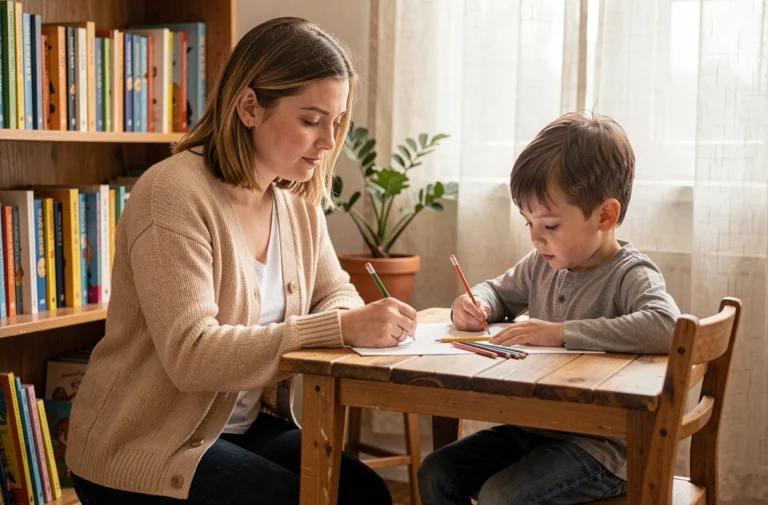
- Ten minutes of free play before bed: board games, drawing, building, shared reading. The content matters less than the consistency. Children quickly integrate this appointment and look forward to it.
- The micro-outing during the week: a walk around the block, a stop at the neighborhood park, a run together. Fifteen minutes outside is enough to change the pace of an evening.
These rituals require no special materials. Their strength comes from repetition and the fact that parents genuinely participate, without doing anything else in parallel.
Home activities to strengthen parent-child bonds
Cooking with a four-year-old takes three times longer than doing it alone. Flour ends up on the floor, the proportions are approximate, and the result can sometimes be inedible. And yet, it is exactly this type of moment that children recount years later.
Why imperfect activities create more memories
A memory forms when an emotion is associated with a situation. Activities where everything goes as planned leave little trace. Those where something goes awry (a failed pancake, a drawing that spills over, a card castle that collapses) generate laughter, surprise, or complicity.
The goal is not to succeed at the activity. It is to experience it together, with all the clumsiness and improvisation that entails.
Concrete ideas without specific materials
Transform the living room into a fort with sheets and cushions. Invent a story with multiple voices at bedtime, where each family member adds a sentence. Sort through phone photos together to print some and display them.
The best family activities cost zero euros and last less than an hour. What makes them unforgettable is the complete presence of each participant.
Inequalities in family time: adapting advice to reality
Recommendations about family moments often assume that all households have the same free time. The reality is more nuanced. Santé publique France notes that children of less-educated parents spend more time in front of screens and more often have a screen in their room.
This observation is not meant to induce guilt. It invites us to adapt family rituals to the real constraints of each household. A parent working irregular hours cannot establish a collective dinner every night. However, they can sanctify another time slot: weekend breakfast, the commute to school, ten minutes before leaving for work.
The central idea remains the same: it is not the quantity of time spent together that produces lasting memories. It is the quality of attention during that time. Five minutes of play where a parent is fully available is worth more than an hour of distracted cohabitation.
Every family can build its own rituals based on what they already experience. The car ride, waiting at the doctor’s office, preparing the school bag become opportunities for connection when we decide to be fully present. Unforgettable moments are not planned; they are noticed.