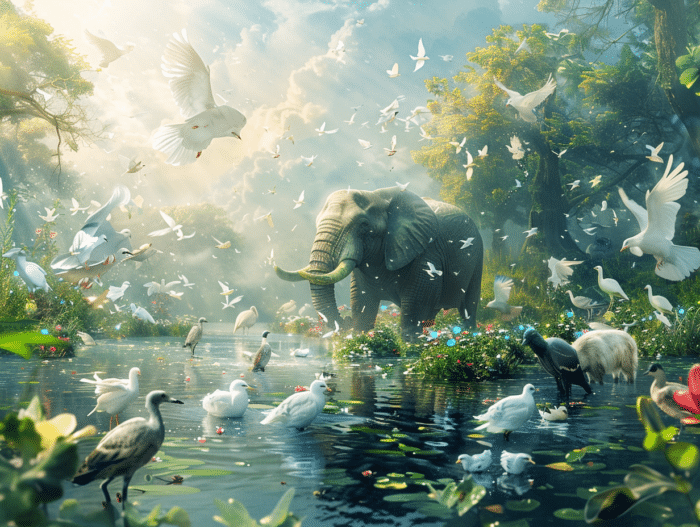
Dreams involving animals are common and often laden with symbolism. Different cultures and religions around the world have attributed various meanings to them. In ancient Egypt, for example, crocodiles or snakes could represent both divinity and danger. In North America, Indigenous peoples see animals in dreams as spiritual guides or totems. Christianity, on its part, may associate animals with virtues or sins — the lamb symbolizing innocence and the lion resurrection. The interpretation of animal dreams is thus a fascinating crossroads where mythologies, personal beliefs, and folklore intersect.
Interpretation of Animal Dreams in Cultural Traditions
The symbolism of animals in dreams is a rich and complex field, varying greatly from one culture to another. In Western dream tradition, the lion embodies majesty and power, while the raven is often associated with intelligence and the ability to metamorphose. These interpretations are rooted in mythologies and folklores that have evolved over the centuries, profoundly influencing our understanding of the dreams in which these animals appear.
The concept of analogies and correspondences plays a predominant role in how we attribute meanings to animals in our dreams. Bolos de Mendès, considered the first occultist of the West, argued for the existence of an antipathy between the basilisk and the domestic weasel, highlighting the complexity of symbolic interactions between animal species in the dream world. These interrelations are often revealing of the underlying dynamics in our own lives, such as conflicts, alliances, or transformations.
The Islamic tradition offers a different perspective: dreaming of a cat in Islam can be interpreted as a sign of protection against evil or the presence of a loyal friend. Animals in dreams are not just symbols, but can also be seen as messengers carrying advice or warnings. The meaning of an animal in a dream can vary significantly, reflecting the diversity and richness of cultural and religious interpretations.
Symbolism and Meaning of Animals in Religious Beliefs
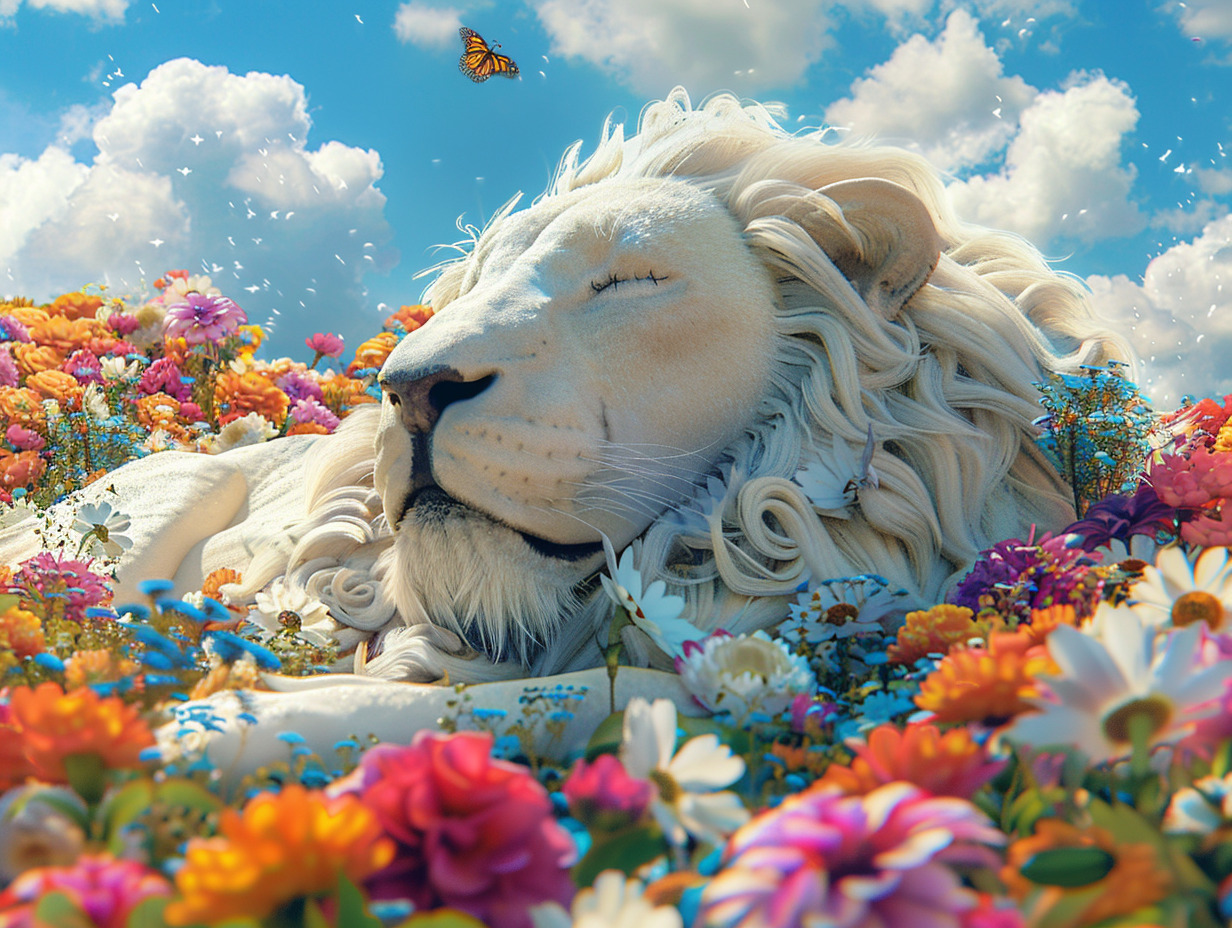
Food taboos and religious prohibitions testify to the symbolic power of animals in many cultures. The pig is a taboo among practitioners of Judaism and Islam, signifying a repulsion that transcends the dietary sphere to anchor itself in the spiritual. These prohibitions, far from being arbitrary, are imbued with profound meanings and prescriptions that shape both the dreams and the daily lives of believers.
In astrology, the divinatory art that scrutinizes the stars, animals are both symbols and guides. Eudoxus of Cnidus, an astronomer and philosopher of ancient Greece, already associated the signs of the zodiac with divine figures. This tradition endures, linking the constellations to totem animals whose characteristics influence our character and destinies, both awake and asleep.
Chinese cosmology, with its four totem animals corresponding to the cardinal points – the Azure Dragon in the East, the Black Turtle in the North, the White Tiger in the West, and the Vermilion Bird in the South – and the Yellow Unicorn symbolizing the center, the Earth, illustrates how animals structure thought and space. These mythical creatures are not mere representations; they reflect a universal harmony and a moral and spiritual order.
The recurring presence of fabulous or extinct beasts such as the mammoth in dreams refers to a collective memory, a nostalgia for a mythologized past. These animals, powerful symbols of cycles and renewal, connect us to an imaginary where dream and reality blur, where history intertwines with myth to reveal profound truths about our existence.