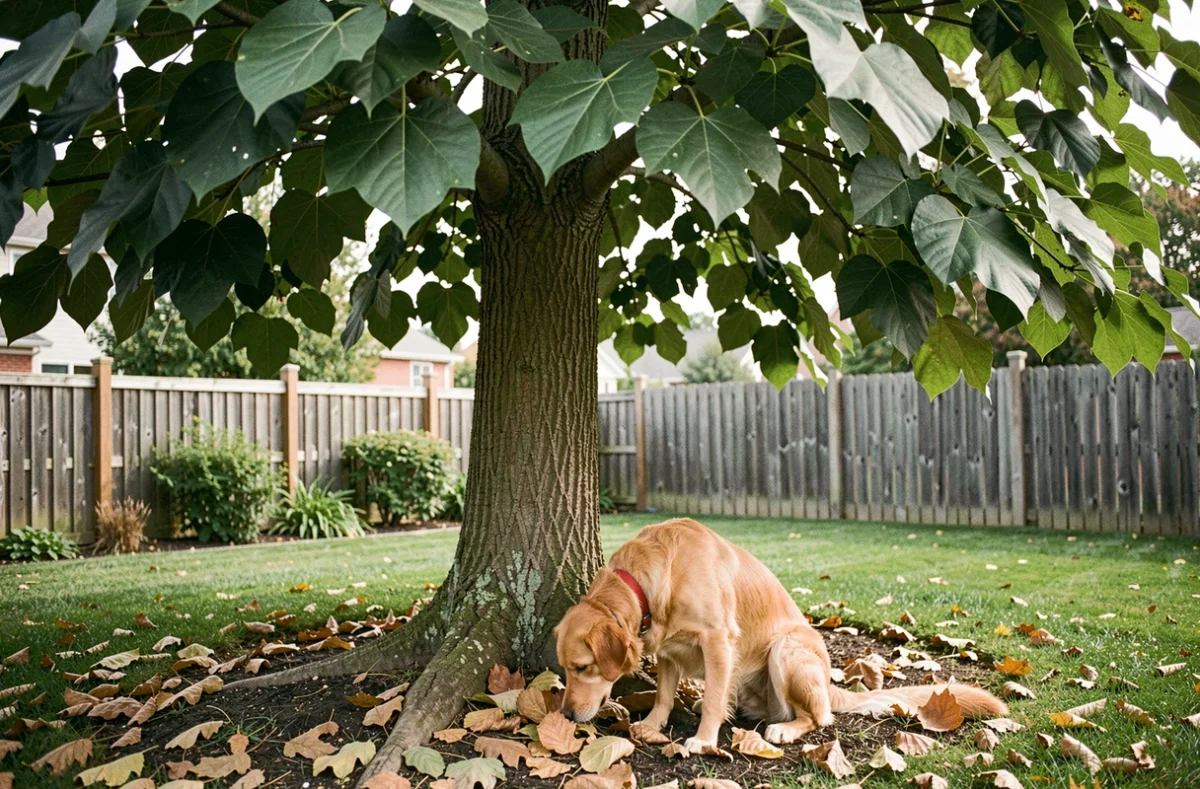
With its large, heart-shaped leaves and clusters of white flowers, the catalpa is one of the most common ornamental trees in French gardens. Dog and cat owners often wonder whether it is toxic to their pets.
The available evidence is less clear-cut than you might expect: catalpa does not appear on the most widely consulted lists of toxic plants in veterinary medicine, but the absence of a listing does not settle the question.
Catalpa in veterinary toxicology databases: a plant that is not listed
The ASPCA (American Society for the Prevention of Cruelty to Animals) database, a global reference for plant toxicity in pets, does not list either Catalpa speciosa or Catalpa bignonioides as toxic to dogs, cats, or horses. This is worth stating clearly, as many web pages include catalpa on lists of dangerous plants without citing a specific veterinary source.
To understand the dangers of catalpa to animals, it is important to distinguish verified evidence from general precautions that apply to any plant not intended as food.
The absence of a toxicity listing is not a certificate of safety. The ASPCA database does not cover every plant species, and a plant’s absence from the list simply means that no documented poisoning report has led to its inclusion. Catalpa pods and seeds, for example, are not considered edible, even though no toxic dose has been established.
Catalpa leaves, pods, and seeds: which parts to watch
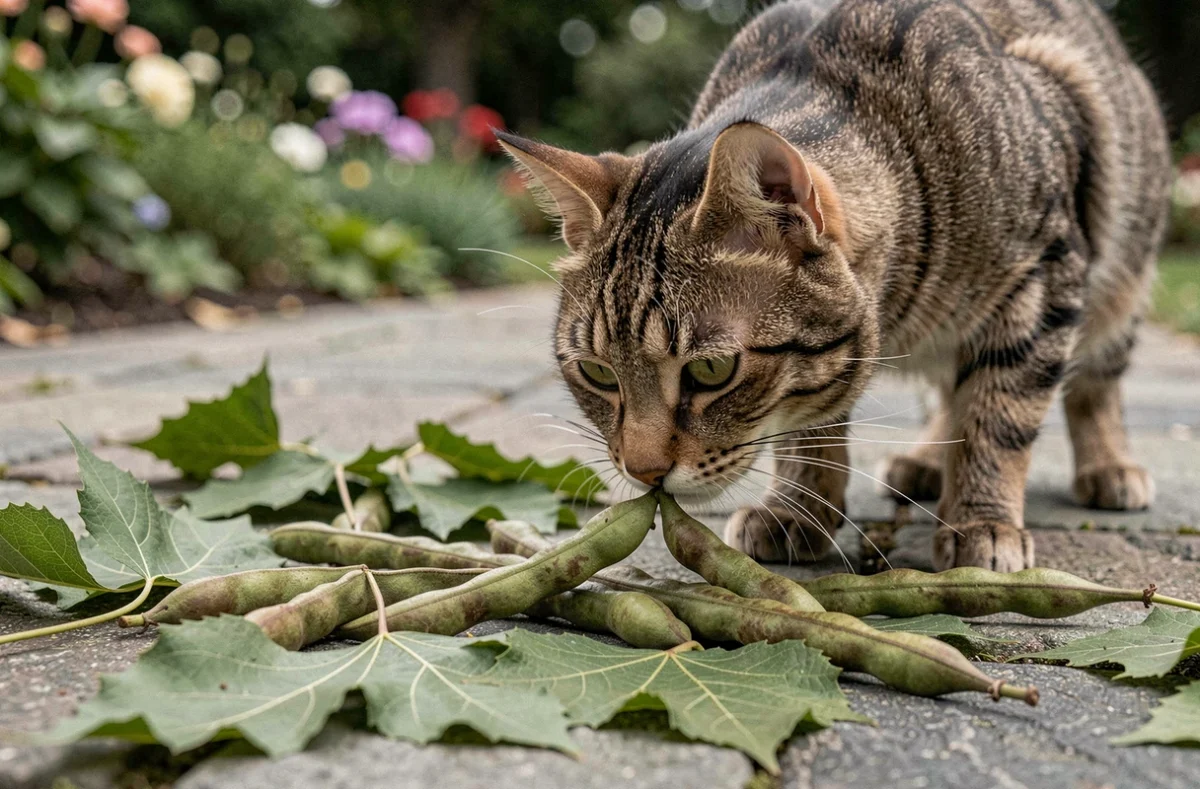
Catalpa leaves are the easiest part for a dog or cat exploring the garden to reach. Their large size makes them easy to spot on the ground after they fall in autumn, and some animals may chew on them out of curiosity.
No published veterinary study documents cases of severe poisoning in dogs or cats after they have eaten catalpa leaves. The lack of clinical data does not prove that the leaves are completely safe, but it does put the risk into perspective compared with plants whose toxicity is firmly established, such as oleander, lily of the valley, and lilies.
The case of pods and seeds
Catalpa’s long pods, which can grow to several dozen centimeters, fall at the end of the season and litter the ground. A playful dog may mistake one for a stick. Catalpa seeds are not considered edible, although no specific toxic dose has been published in authoritative veterinary sources.
There is also a mechanical risk: an animal that swallows pieces of a dry pod may develop digestive problems due to blockage or irritation, regardless of any chemical toxicity.
Symptoms to watch for after eating a non-food plant
In the absence of catalpa-specific toxicology data, watch for the same symptoms as with any non-food plant ingested by a pet:
- Vomiting in the hours after ingestion, often the first sign of stomach irritation in both dogs and cats
- Diarrhea, sometimes accompanied by excessive drooling, indicating a digestive reaction to plant matter
- Loss of appetite or unusual lethargy, which should be monitored for 24 hours after suspected contact with the plant
- Visible mouth irritation (red gums, rubbing the muzzle) if the animal has chewed leaves or bark
These symptoms are not specific to catalpa and can occur after an animal eats any plant not intended as food. If they appear, call your veterinarian—there is no need to panic.
When to contact a veterinarian or poison control center
The Animal and Environmental Poison Control Center of Western France recommends gathering several details before calling: the animal’s species, which part of the plant was eaten, the estimated amount, and the approximate time of ingestion. Keeping a sample of the plant or a clear photo can significantly speed up diagnosis.
A veterinarian will not make the same assessment for a three-month-old puppy that has swallowed an entire pod as for an adult dog that has chewed a leaf. The circumstances, the animal’s weight, and the amount ingested determine what to do next.
Practical garden precautions to protect dogs and cats
Uprooting a mature catalpa as a precaution would be disproportionate given the available evidence. A few simple measures can reduce the risks associated with this tree, as well as with most garden plants.
Regularly picking up fallen pods limits pets’ access to the least-studied parts of the tree. The same practice is useful for horse chestnut trees, whose spiky husks can cause similar problems.
For puppies and kittens, whose exploratory behavior often involves chewing everything, a low fence around the trunk during their first few years may be enough. Fallen leaves can easily be cleared in autumn with a leaf blower or rake.
Garden plants with confirmed toxicity: the real danger
Catalpa does not appear on any list of plants with confirmed veterinary toxicity. However, several very common plants in French gardens pose documented, serious risks to dogs and cats:
- Oleander, where eating just a few leaves can cause fatal heart problems
- Lily of the valley, which is toxic in every part, including the water in the vase
- Lilies, which are especially dangerous to cats (acute kidney failure can occur even after ingesting a small amount)
- Yew, whose seeds and foliage contain taxine, a potentially fatal alkaloid
Identifying genuinely toxic plants in your garden is more protective than worrying about an unlisted tree. A quick inventory of the plants in areas accessible to pets, checked against the ASPCA or Animal Poison Control Center lists, is the most effective approach.

Catalpa remains a popular ornamental tree, and its toxicity to pets has not been established by authoritative veterinary sources. The absence of a listing does not mean you should abandon common sense: picking up pods, keeping an eye on young animals, and knowing what to do if they may have eaten some are enough in most cases. The time spent worrying about catalpa would be better spent checking whether the same garden contains oleander or lily of the valley.