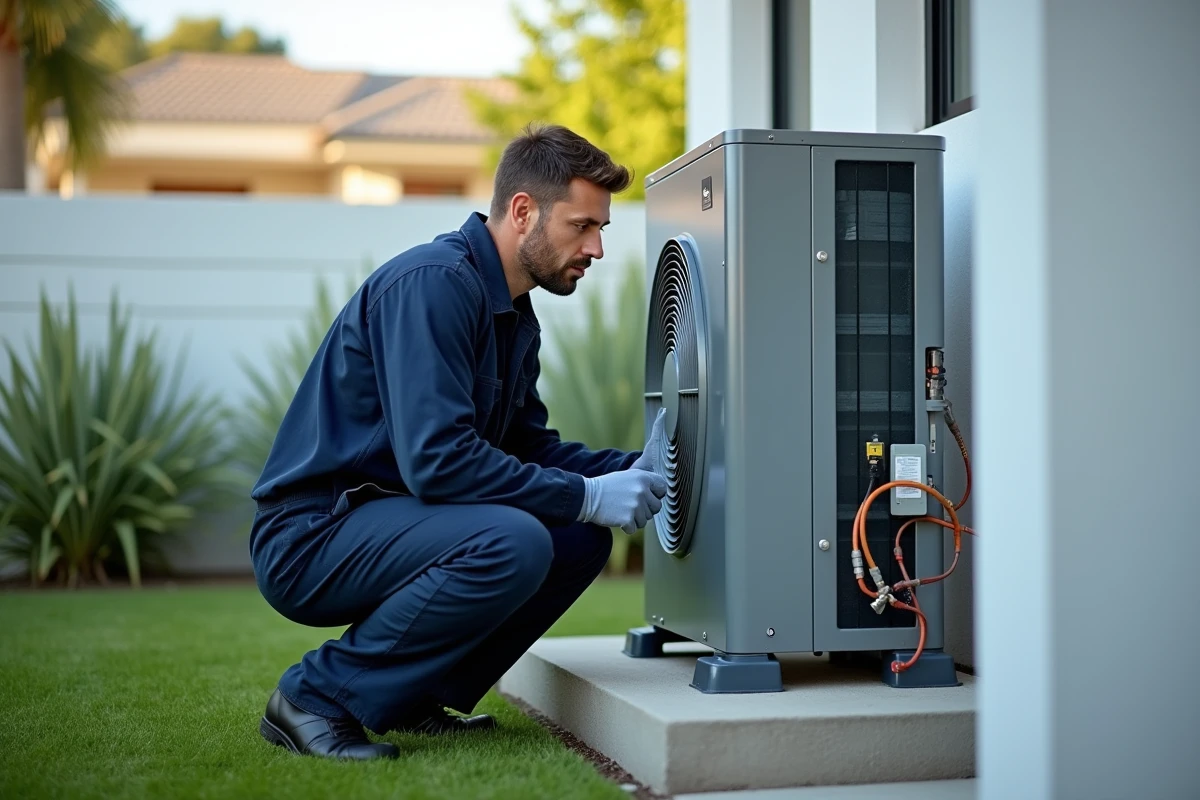
On the ground, most of the problems encountered after the installation of an air-to-water heat pump do not come from the equipment. They stem from approximate sizing, sloppy hydraulic connections, or a location chosen by default. Before starting a project, it’s beneficial to understand what happens at each phase, from the thermal study to the commissioning.
Refrigerant and F-Gas Regulation: What Changes for Your Air-to-Water Heat Pump
The European F-Gas regulation mandates a gradual reduction of HFC fluids with high global warming potential. Manufacturers are shifting to R32, or even natural fluids like R290 (propane) for residential air-to-water heat pumps.
This shift is not just a line on the technical sheet. It modifies installation conditions: safety distances around the outdoor unit, ventilation of the technical room, positioning relative to the openings of the dwelling. You do not install an R290 heat pump in the same way as an R410A heat pump.
Specifically, if you compare quotes, check which refrigerant is used. An installer still offering R410A is working with a fluid that is being restricted. Choosing a device compatible with the new standards now avoids additional compliance costs in a few years. To successfully install an air-to-water heat pump, this question of the refrigerant should be raised at the first meeting with the professional.

Sizing of the Heat Pump: The Most Common Mistake in Individual Homes
We regularly see oversized heat pumps installed “to be safe.” The result is the opposite: the device goes through short cycles (on/off), wears out prematurely, and consumes more than expected. An undersized heat pump, on the other hand, runs continuously without reaching the set temperature on the coldest days.
Sizing is based on the thermal study of the dwelling, not on the floor area. Two houses of the same size on the same street can have very different power needs depending on insulation, orientation, type of emitters (high-temperature radiators, underfloor heating), and heating habits.
What the Thermal Study Should Cover
- The analysis of the actual thermal losses of the building, not a flat estimate based on the year of construction.
- The survey of existing emitters: old cast iron radiators do not operate at the same temperature as low-temperature underfloor heating. This determines the choice of heat pump model.
- The consideration of the climatic zone and the base outdoor temperature, which determines the power needed for the coldest days of the year.
If the installer provides a quote without having conducted or requested a thermal study, it is a warning sign. No thermal study, no reliable sizing.
Location of the Outdoor Unit: Acoustic Constraints and Performance
The outdoor unit captures heat from the air. Its positioning affects both the system’s efficiency and the acoustic comfort, yours as well as that of the neighbors.
The outdoor unit is often placed against a facade wall for ease of connection. The problem arises when this wall faces a bedroom or a neighboring property. Feedback varies on this point, but noise disturbances remain the primary source of disputes after installation.
Practical Rules for Positioning
Keep the unit away from bedrooms and property boundaries as much as possible. Allow for a sufficient clearance around the outdoor unit so that the airflow is not obstructed, which would reduce performance. Avoid closed corners on three sides where recycled air diminishes efficiency.
With heat pumps using R290, safety distances from the openings of the dwelling are increased. This is a parameter to integrate from the technical visit, not at the time of installation.

Hydraulic Connection and Commissioning: The File No One Wants to Prepare
The connection between the outdoor unit, the indoor unit, and the existing heating circuit requires special attention. Poor hydraulic flow calibration or an inadequate buffer volume causes recurring malfunctions: water hammer, erratic temperature rises, defrosting issues.
In renovations, when connecting the air-to-water heat pump to an existing radiator network, it is essential to check the compatibility of the water supply temperatures. A system designed to operate at high temperatures (above 55 °C) may require the replacement of certain emitters or the choice of a high-temperature heat pump, which impacts the budget.
Preparation of the Commissioning File
Controls on subsidy files have tightened. Applications for aid are now denied for missing documents. Here’s what the installer must provide at the end of the project:
- The signed commissioning report, with the recorded adjustment parameters.
- The hydraulic diagram of the installation, which describes the complete circuit.
- The refrigerant capacity certificate of the professional and their valid RGE qualification.
- The completion report, a document often required to unlock grants (MaPrimeRénov’, CEE).
Keep each document as soon as you receive it. An incomplete file can delay the payment of aid for months or even lead to a definitive refusal.
The successful installation of an air-to-water heat pump relies on technical choices made in advance, not last-minute adjustments. The refrigerant, sizing, location of the outdoor unit, and the rigor of the administrative file form a whole. Neglecting any one of these points is enough to turn a profitable project into a source of lasting complications.