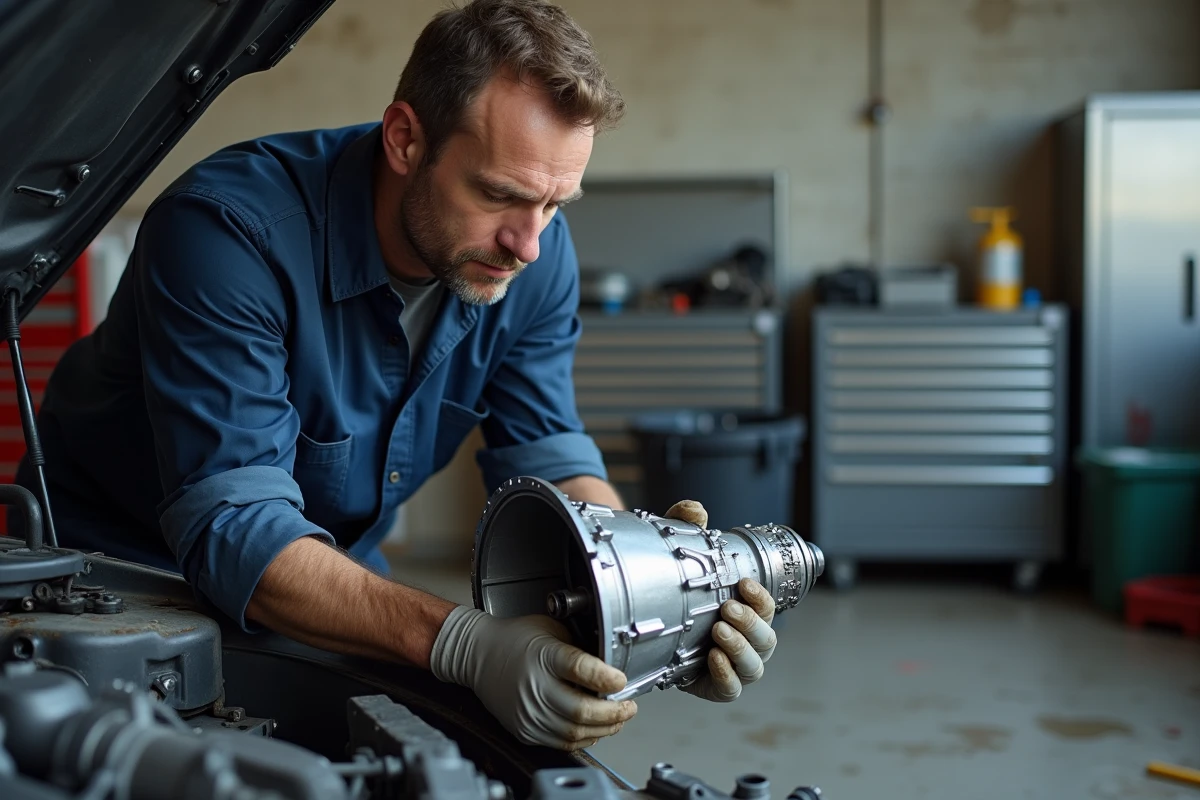
On a a sloping parking lot, engine idling, we release the brake and the car moves forward gently without touching a lever. No clutch pedal under the left foot, but a small notched selector that allows you to force the gear change. This is the signature of a semi-automatic gearbox, a transmission system that deliberately blurs the line between manual and automatic driving.
Pilot-operated clutch and torque converter: two schools of semi-auto
When talking about semi-automatic gearboxes, we often mix two very different architectures. Distinguishing them changes the way you drive, maintain, and even choose a vehicle.
The first family relies on a classic clutch operated by an actuator. The driver has no clutch pedal: an electro-hydraulic robot opens and closes the disc in their place, on signal from the computer or lever. This is the principle of simple robotic gearboxes found in many European city cars. The gear change briefly cuts the transmission, causing a slight jolt that is noticeable at low speeds.
The second family, older, uses a torque converter associated with a sequential control. Here we think of the Porsche Sportomatic or the VW Autostick, where a micro-switch housed in the gear lever knob controlled a vacuum-operated clutch. In these systems, the converter absorbed the effort at startup, allowing you to start in almost any gear without stalling.
To fully understand the operation of a semi-automatic gearbox, it is essential to keep this distinction in mind: not all share the same mechanics or driving sensations.
Semi-automatic gearbox in real driving: what changes at the wheel
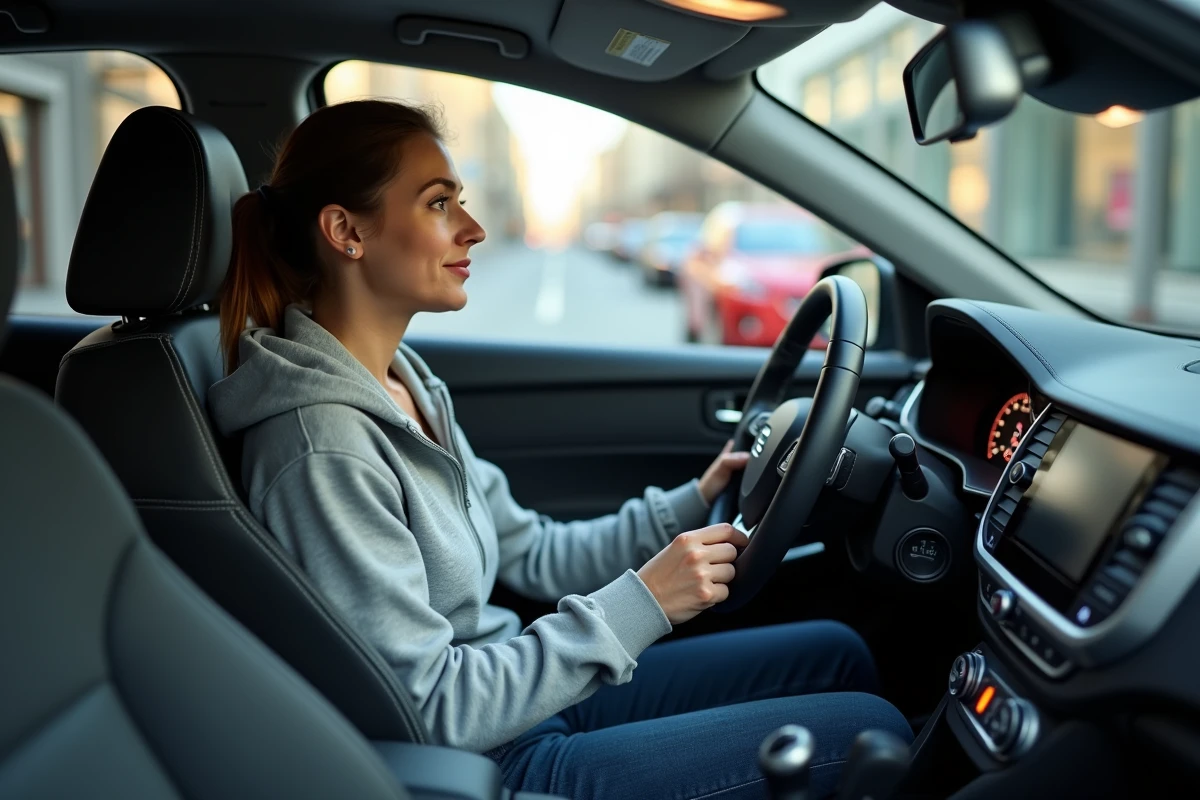
When getting into a vehicle equipped with a semi-auto for the first time, one instinctively looks for the clutch pedal. It does not exist. The left foot remains at rest, and this is the first reflex to lose.
Automatic mode or sequential mode
The majority of modern semi-automatic gearboxes offer two modes in the same vehicle. In automatic mode, the computer manages gear changes based on engine speed, load, and speed. In sequential mode (often activated by pushing the lever on a notched grid +/-), you take control of each gear.
This dual use is a real asset in daily driving. On the highway, we let the computer do its work. On a mountain road or exiting a turn, we downshift ourselves to take advantage of engine braking or to set the revs before a surge. The driver chooses their level of involvement at every moment.
Paddles on the steering wheel or notched lever
The interface varies depending on manufacturers and generations. Sports cars often adopt paddles fixed behind the steering wheel: right paddle to upshift, left paddle to downshift. The response is almost instantaneous on dual-clutch systems.
On older models or entry-level city cars, a sequential lever is used on the center console. The response time may be longer, especially on simple robotic systems, and the feedback varies depending on the state of the actuator and software calibration.
Maintenance of a semi-automatic gearbox: points to watch
It is often said that a semi-auto requires no maintenance. The reality is more nuanced, and neglecting certain elements significantly shortens the lifespan of the transmission.
- Gearbox oil: even if some manufacturers claim it is “lifetime,” periodic oil changes preserve the quality of shifts and limit wear on synchronizers or the converter.
- Clutch actuator (on simple robotic systems): this electro-hydraulic component wears out over time. A slipping clutch or repeated jolts at startup often indicate a tired actuator.
- Position sensors and computer: the semi-auto depends on an electronic chain. A faulty speed sensor or a corroded connector can be enough to cause erratic shifts.
- Clutch disc (on simple robotic systems): unlike an automatic gearbox with a converter, robotic systems retain a physical clutch disc that wears out, just like a manual. Its lifespan greatly depends on the driving style in the city.
Semi-auto, robotic or dual-clutch: clarifying the vocabulary
The terminological blur surrounding these transmissions complicates the purchasing choice. Here’s what to remember to find your way.
A simple robotic gearbox (like Selespeed, Sensodrive, Easytronic) takes a manual gearbox and adds an actuator. It is the least expensive solution, but also the one that generates the most jolts. It has largely disappeared from new catalogs.
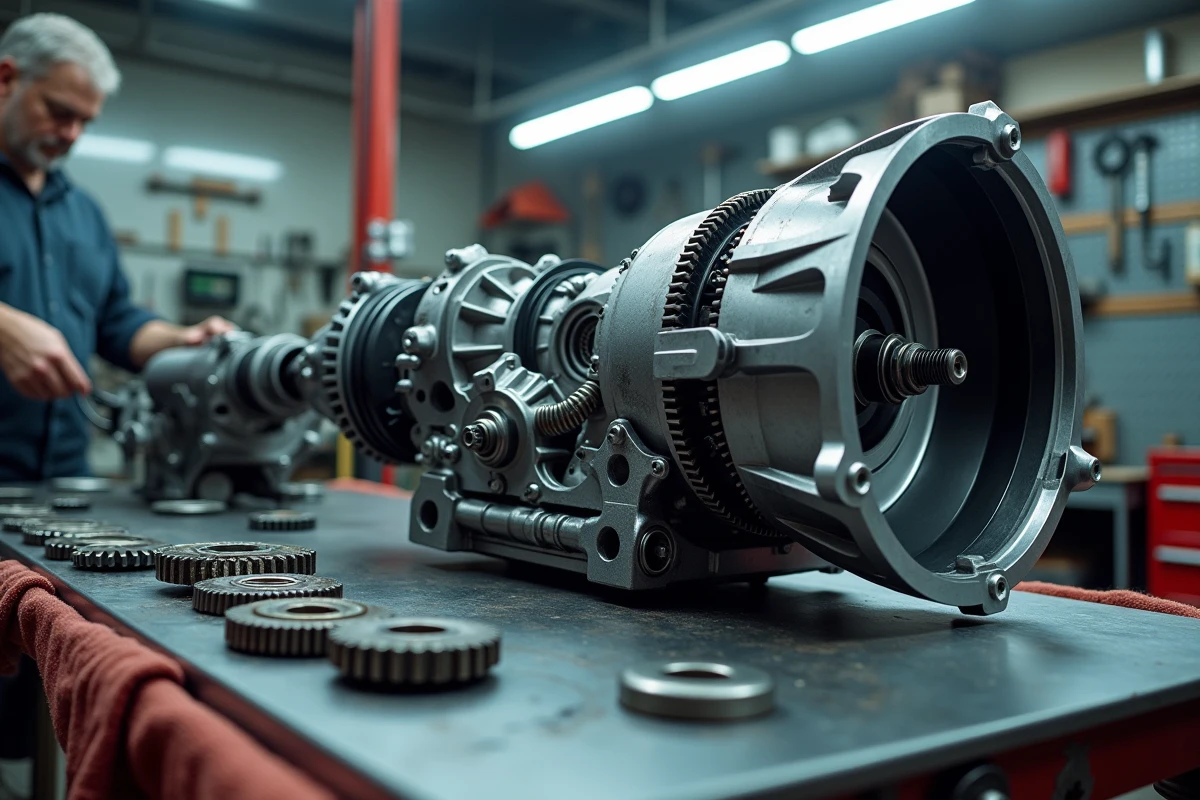
A dual-clutch gearbox (DSG at Volkswagen, EDC at Renault, PDK at Porsche) uses two shafts and two clutches operating alternately. The next gear is pre-engaged even before the previous one is released. The shift is almost imperceptible, even under full load.
A classic automatic gearbox with a torque converter and sequential mode (Tiptronic, Steptronic) is not, strictly speaking, a semi-automatic. It is operated in the same way in manual mode, but the internal mechanics differ radically: no clutch disc, no synchronizer, a hydraulic fluid ensures the connection between the engine and the transmission.
The confusion arises from the fact that all these gearboxes offer a sequential mode on the surface. Under the hood, the components, maintenance costs, and sensations have nothing in common.
For a car enthusiast looking for the best compromise between driving pleasure and practicality, the dual-clutch gearbox remains today the most advanced form of semi-automatic transmission. It combines the responsiveness of a manual with the comfort of an automatic, without the jolts of older robotic systems. It remains to check, before any used purchase, the history of gearbox oil changes and the condition of the clutches: two factors that determine the longevity of the entire transmission.