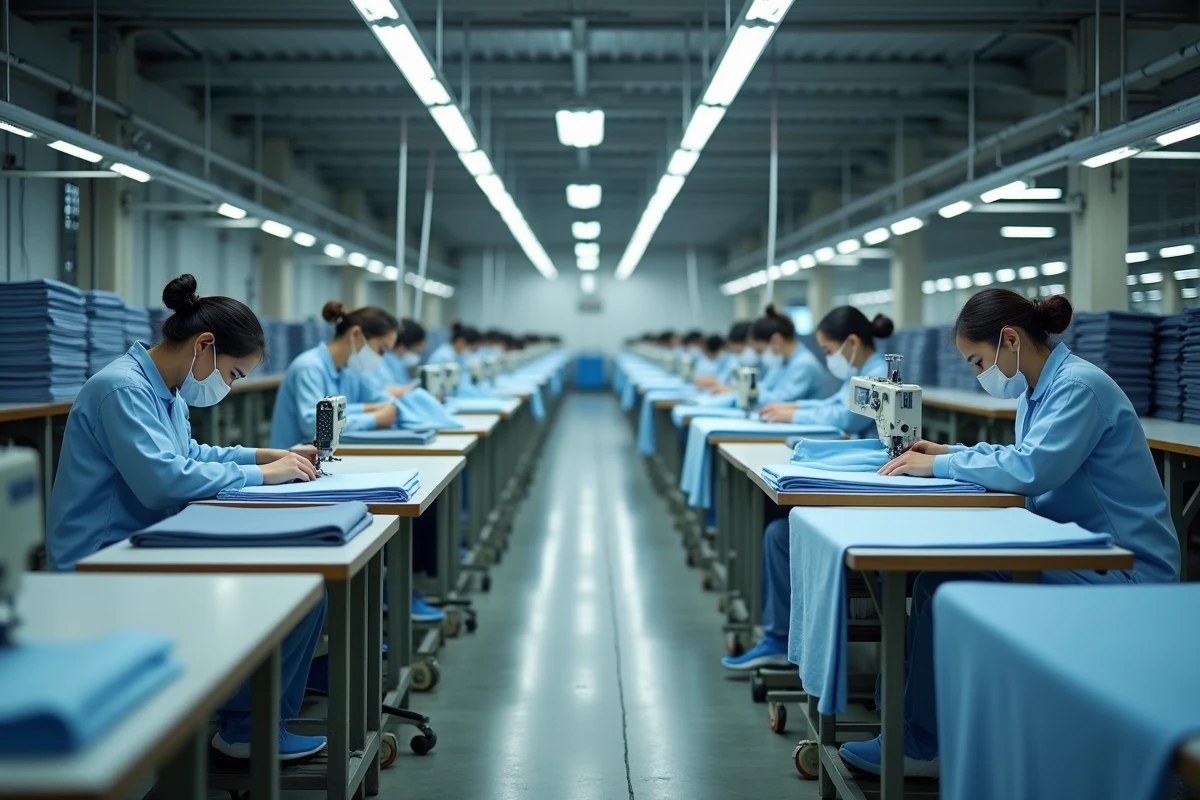
When you order a t-shirt for three euros on Temu, you receive a package shipped from China in less than two weeks. Behind this speed, there is a manufacturing and logistics circuit that relies on mechanisms very different from those of traditional commerce. Understanding how Temu products are made and delivered allows us to gauge what this price implies, both upstream and downstream.
Pressure on Chinese suppliers: what the Temu model imposes on factories
It is sometimes imagined that Temu manufactures its products. This is not the case. The platform operates as a marketplace: it connects manufacturers, mostly Chinese, with buyers from around the world. The partner factories produce at their own risk.
The uniqueness lies in the reverse auction system. Manufacturers propose a price for a given product, and Temu selects the lowest offers. This mechanism drives production costs down to the floor. For factories, this means very slim margins, compensated only by the volume of orders.
We also observe a system of consigned stocks: the manufacturer produces, sends their goods to a consolidation warehouse, and is only paid once the sale is made. If the product does not sell, it is the supplier who absorbs the loss.
This logic pushes factories to standardize designs, shorten production cycles, and limit any creative risk-taking. To delve deeper into the manufacturing process at Temu, particularly for clothing and textiles, the steps remain largely the same regardless of the segment.

Temu production locations: where products are actually made
The vast majority of items sold on Temu come from factories located in China’s coastal provinces, where the manufacturing industry has concentrated for decades. Guangdong, Zhejiang, and Fujian host specialized industrial clusters: textiles, consumer electronics, accessories, toys.
Temu does not own these factories. The platform relies on the industrial fabric already structured around Pinduoduo, its parent company. PDD Holdings, which oversees both entities, has built its supplier network since 2015 in the Chinese domestic market before opening it internationally with Temu in 2022.
No local manufacturing in Europe
No Temu product is made in France or any other European country. Everything is shipped from China, generally by cargo plane for small packages. Direct shipping from factory to consumer eliminates intermediaries, but it extends delivery times compared to local stock.
Returns vary on this point: some buyers receive their order in ten days, while others wait more than three weeks depending on the period and the product.
Ultra-short production cycle: fast fashion taken to the extreme
The Temu model shares characteristics with that of Shein: constantly renewed collections, short series, and responsiveness to trends measured in days rather than weeks. The main difference is that Temu does not design its own clothing. It is third-party sellers who offer their models.
In practice, the cycle looks like this:
- A manufacturer identifies a trend (via Temu sales data or social media), produces a prototype, and puts it online within a few days.
- If the initial sales take off, production ramps up with series of several thousand pieces, still from the same factory.
- If the product does not find a buyer quickly, it is withdrawn or discounted, and the manufacturer moves on to the next design.
This production rhythm relies on cycles of a few days, whereas a traditional brand operates on seasons of several months. The direct consequence: products are designed to be sold quickly, not to last.
Traceability and regulatory issues in Europe
Since 2024, European authorities and several NGOs have pointed out a structural problem: Temu presents itself as a simple marketplace, but its purchasing and pricing practices give it quasi-directive power over manufacturing chains. This ambiguity raises the question of responsibility.
Regarding traceability, information remains limited. A buyer who receives a garment ordered on Temu generally has no visibility on the factory of origin, the raw materials used, or the working conditions. The platform does not publish a list of suppliers, unlike some fast fashion brands under pressure from consumers and regulators.
The two-euro tax on small packages
The European Commission proposed in May 2025 to impose a fee of two euros on each small package entering the European Union. This measure directly targets Temu’s shipping model, based on sending individual low-value packages from China.
This fee mechanically increases the cost of each order and could push Temu to modify its logistics: consolidate shipments, open warehouses in Europe, or adjust price thresholds. For consumers in France, this potentially means the end of items priced below three euros delivered for free.
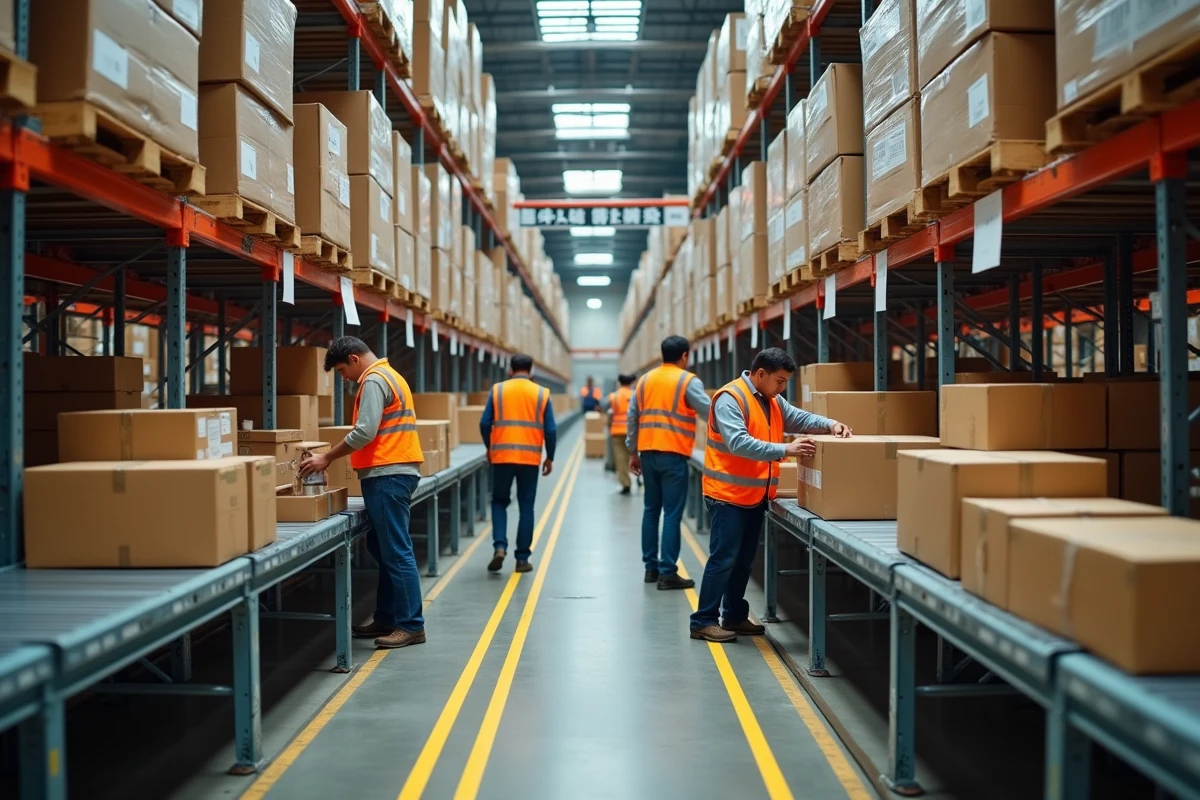
The Temu model relies on a simple equation: Chinese factories under pressure, a platform that captures value, and low prices made possible by the absence of intermediaries and disappearing customs advantages. The European fee on small packages and increasing traceability requirements will force concrete adjustments in the coming months, both in manufacturing and logistics.