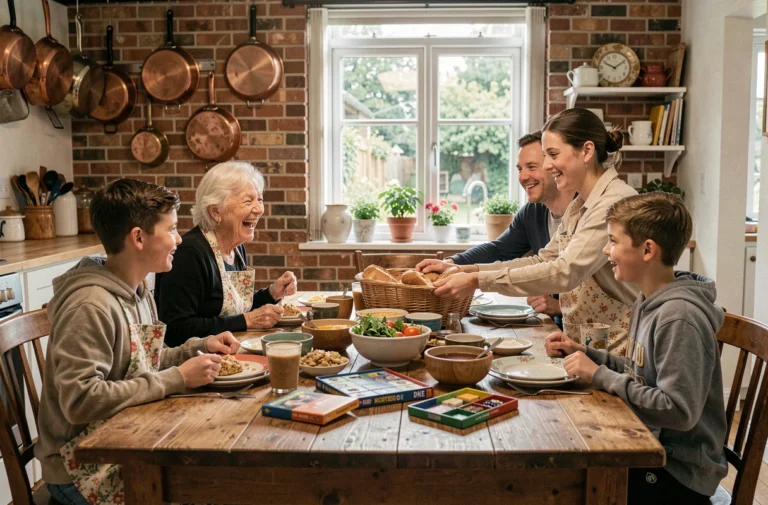
French seniors place the environment among their top three national priorities at a rate comparable to the rest of the population. Nearly 29% of those aged 65-80 cite climate and the environment as major issues, according to the October 2025 Parlons Climat study. Measuring the gap between this declared sensitivity and the practices actually adopted after 60 allows us to identify the most effective levers for a greener lifestyle at this age.
Energy consumption of seniors: what field data reveals
The ADEME study “Seniors and Water Conservation” published in March 2026 documents a marked decrease in domestic water consumption among retirees who have installed rainwater collectors, often after workshops organized by CCAS. This result highlights a recurring pattern: seniors adopt eco-friendly practices when there is concrete local support.
The platform greenseniors.org lists several of these support mechanisms, from municipal workshops to association programs, that facilitate the transition to less energy-consuming habits in daily life.
| Eco-friendly practice | Adoption by urban seniors | Adoption by rural seniors | Main barrier |
|---|---|---|---|
| Rainwater collector | Low (space constraint) | High (CCAS workshops) | Installation cost |
| Adapted cargo bike | Marginal | Increasing (INSEE survey 2026) | Perceived ergonomics |
| Community garden | Increasing (shared gardens) | Common practice | Physical accessibility |
| Voice energy monitoring | Emerging | Very rare | Technological proficiency |
This table highlights a clear geographical gap. Rural seniors surpass urban ones in several practices, particularly in soft mobility. The INSEE survey “Sustainable Mobility and Age” from May 2026 confirms a rural preference for adapted cargo bikes over electric scooters, which are considered poorly ergonomic by this age group.
Voice assistants and energy monitoring: adapting green technology to physical fragility
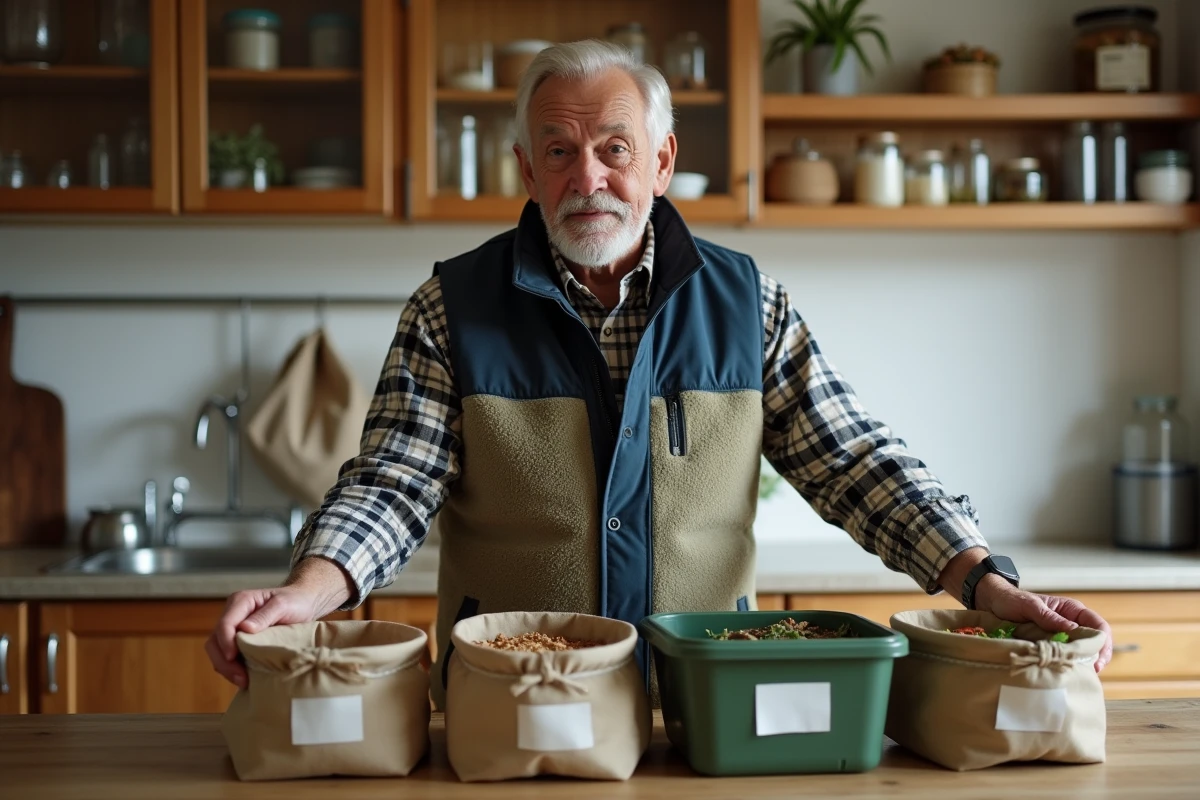
For seniors in a state of physical fragility, moving to the electric meter or handling a smartphone app represents a real obstacle. Voice assistants offer an alternative that preserves autonomy while allowing for energy consumption monitoring.
The principle is simple: a voice command queries a sensor connected to the meter. The response, given orally, indicates consumption in real-time or over a specified period. No screen manipulation, no physical movement.
Conditions for the device to function without compromising independence
- The initial installation must be carried out by a third party (family, municipal technician, association), as configuring connected sensors remains complex for someone unfamiliar with these tools
- The voice interface must operate without a permanent internet connection or with a very basic connection, which excludes certain high-end models that are too dependent on the cloud
- The device must not replace human oversight: a voice assistant complements support, it does not eliminate it
The CCAS workshops mentioned in the ADEME study on water conservation could incorporate this type of technological training. The model already exists for rainwater collectors. Extending it to voice energy monitoring represents a logical next step.
Shared gardens and community vegetable gardens: ecology through food autonomy
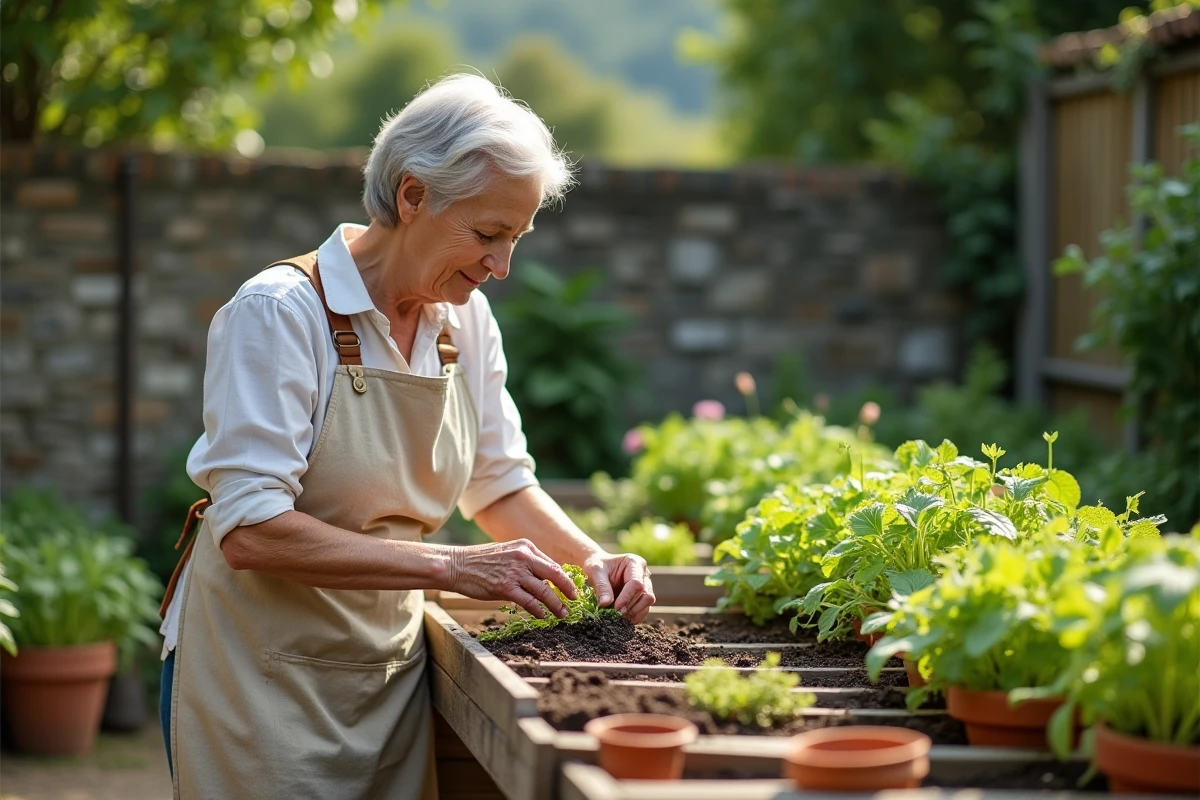
The France Active report from September 2025 on retirees engaged in ecological transition documents a multiplication of associations of retirees managing community vegetable gardens in urban areas. These initiatives combine three functions: local food production, maintaining social ties, and preserving biodiversity.
The interest for seniors goes beyond the ecological dimension. Cultivating a shared garden structures the week, maintains moderate physical activity, and reduces food purchases. For low-income households, this reduction in purchased food consumption represents a direct financial benefit.

A lever for intergenerational solidarity
The Parlons Climat study emphasizes that transmission to future generations is the primary environmental motivation for baby boomers. Shared gardens embody this transmission: retirees interact with families, students, and share horticultural knowledge acquired over several decades.
This dynamic of solidarity extends beyond the garden. It influences other eco-friendly practices, from waste sorting to housing adaptation. Seniors participating in a local collective more easily adopt other green actions, through social momentum.
Soft mobility after 60: why adapted cargo bikes are gaining ground in rural areas
The INSEE survey from May 2026 reveals a counterintuitive phenomenon. In terms of sustainable mobility, rural seniors outpace urban ones. The adapted cargo bike, with electric assistance and ergonomic riding position, is more appealing than the electric scooter, perceived as unstable.
Several factors explain this rural adoption. Distances between home and nearby shops are shorter than in urban peripheries. The terrain is often more navigable. And the lack of frequent public transport pushes individuals to seek individual alternatives.
For seniors whose physical mobility remains sufficient, the adapted cargo bike replaces the car for short trips without loss of autonomy. The ecological gain is direct: elimination of daily motorized trips for shopping or local activities.
The gap between declared practices and actual practices narrows when three conditions are met: structured local support (CCAS workshops, associations), tools adapted to physical condition (cargo bikes, voice assistants), and a collective dimension that anchors change over time. The most recent data shows that the ecological commitment of seniors is not just talk: it is measured in liters of water saved, motorized trips eliminated, and square meters of cultivated gardens.