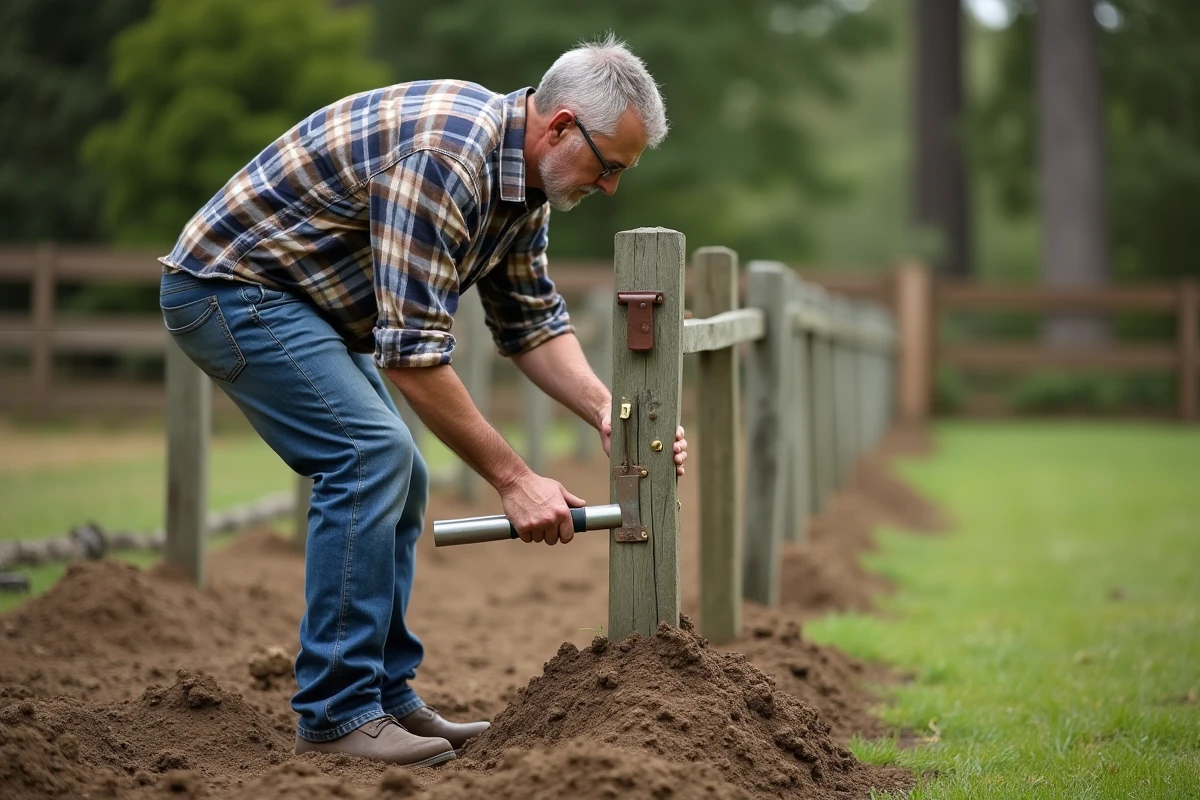
Some municipal decrees are clear-cut: concrete is prohibited for securing fences, prioritizing soil respiration and controlled rainwater management. This constraint, far from stifling possibilities, paves the way for robust alternatives that ensure the anchoring of posts while respecting natural balances.
Why choose a fence installation without concrete?
Installing a fence without concrete is no longer a trivial choice. It meets real environmental criteria, whether imposed or desired: allowing the soil to filter rainwater, preserving soil life, and sustainably reducing its impact. The impermeability of concrete disrupts this balance, and both individuals and communities are now aware of this.
Concrete-free installation also offers true flexibility. Moving a panel, adjusting the layout, working on your land without destroying everything: these advantages immediately appeal to both professionals and discerning amateurs. The brackets or metal anchors pave the way for reversible installations that do not damage the plot. The result: a fence or barrier that stands firm while leaving room for potential project developments.
Another rarely mentioned benefit: the operation is appealing due to its lightness. Less material to move, no bags of cement to handle, no need for a concrete mixer. Effort, nuisances, and construction debris are reduced. For those looking to engage in eco-responsible practices, securing a post for a fence without concrete also limits the footprint on the land and keeps in mind the possibility of dismantling everything without damaging the soil. On the cost side, there are no unpleasant surprises: alternative materials, time savings, less waste: the bill remains controlled while ensuring the desired stability.
Materials, tools, and tips for effectively securing a post without cement
Choosing a good post, whether treated wood, metal, or even composite material, conditions the entire project. Consider the diameter, height, and adapt to the environment. For installation, the hole must be clean: ideally, twice the width of the support, with a depth of 40 to 60 cm depending on the force to be transmitted. The more precise it is, the better it will hold.
Here are the tools and techniques that will make a difference during installation:
- Necessary equipment: shovel, pry bar, sledgehammer or mallet, level, gloves, safety glasses, and perhaps a auger for hard soils.
- Tip: moistening the soil or sand optimizes compaction and secures the anchoring of the post.
- For very loose soils, a bed of stones or gravel at the bottom of the hole improves drainage and stabilizes the base of the support.
A perfectly straight line, a respected spacing, and a taut string make all the difference during installation. Compacting each layer of soil, sand, or gravel without rushing ensures long-term stability. When adding a bracket, the longevity of the whole increases, and everything can be dismantled later without damage. These methods, already adopted in agricultural areas or family gardens, demonstrate that a solid and durable anchoring can be achieved without a single drop of cement.
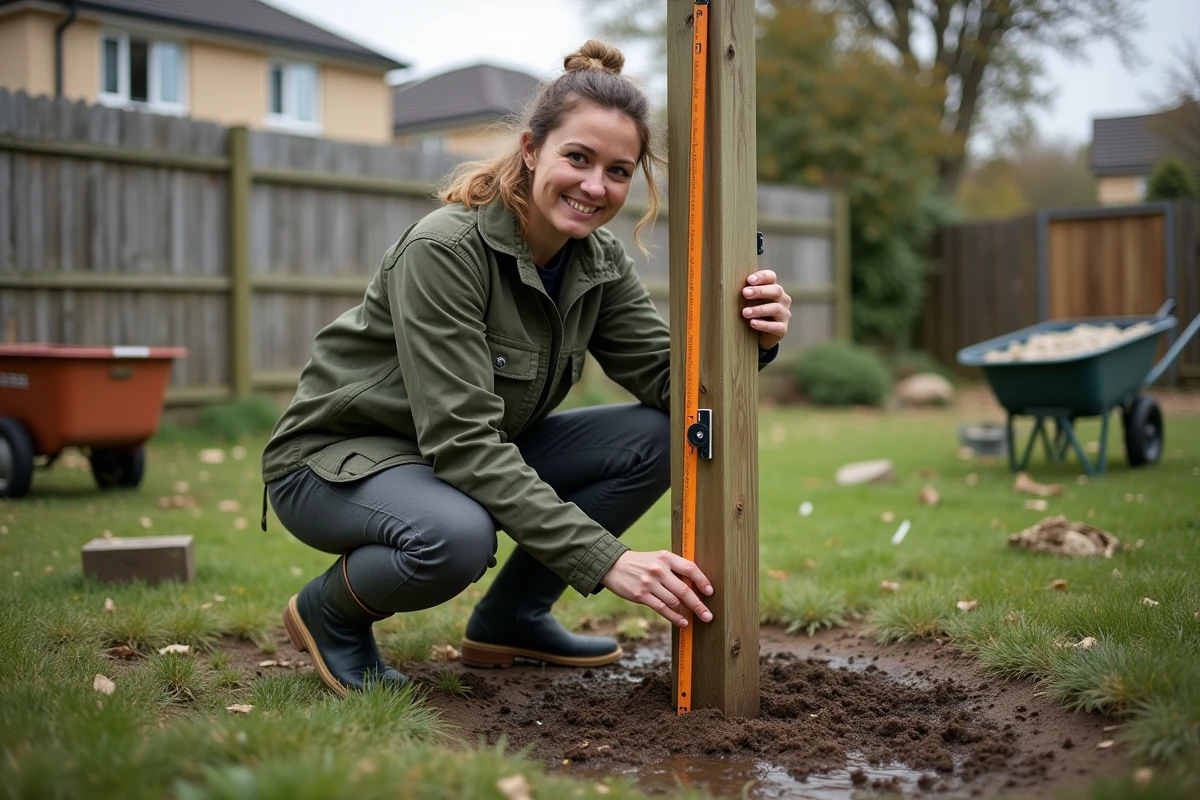
What results to expect and what pitfalls to avoid with these alternative methods?
Opting for a fence without concrete means betting on flexibility. During installation, the time savings are tangible: adjustments, corrections, and adaptations can be made without waiting for the cement to set. With well-compacted soil and suitable brackets, the support is more than sufficient for a residential fence or an ordinary fence. Another advantage: moisture drains naturally, and no stagnation threatens the durability of the post.
However, the method requires rigor and observation. A hole that is too wide, careless compaction, or uncertain alignment can compromise strength. The loosest or highly stressed soils require increased monitoring. The tension wires must be properly adjusted: if the fence sags over time, the entire system loses its relevance. In clayey conditions, climate variations can shift the structure: a detail not to be overlooked to maintain stability.
To appreciate the different applications of these techniques, there are two points of vigilance:
- With a rigid fence, adhering to the recommended spacing remains the main guarantee of a barrier that will not weaken.
- Choosing a bracket fixation will allow for quick disassembly if the project evolves or if the land needs to be exposed.
Installing a fence without concrete anchoring validates modern solutions where rigid anchoring seemed unbeatable. Accompanying nature rather than forcing it, adapting to the rhythm of projects rather than freezing the soil: that is the promise. We give the garden a true breath of fresh air, and the outdoor layout a welcome dose of agility.