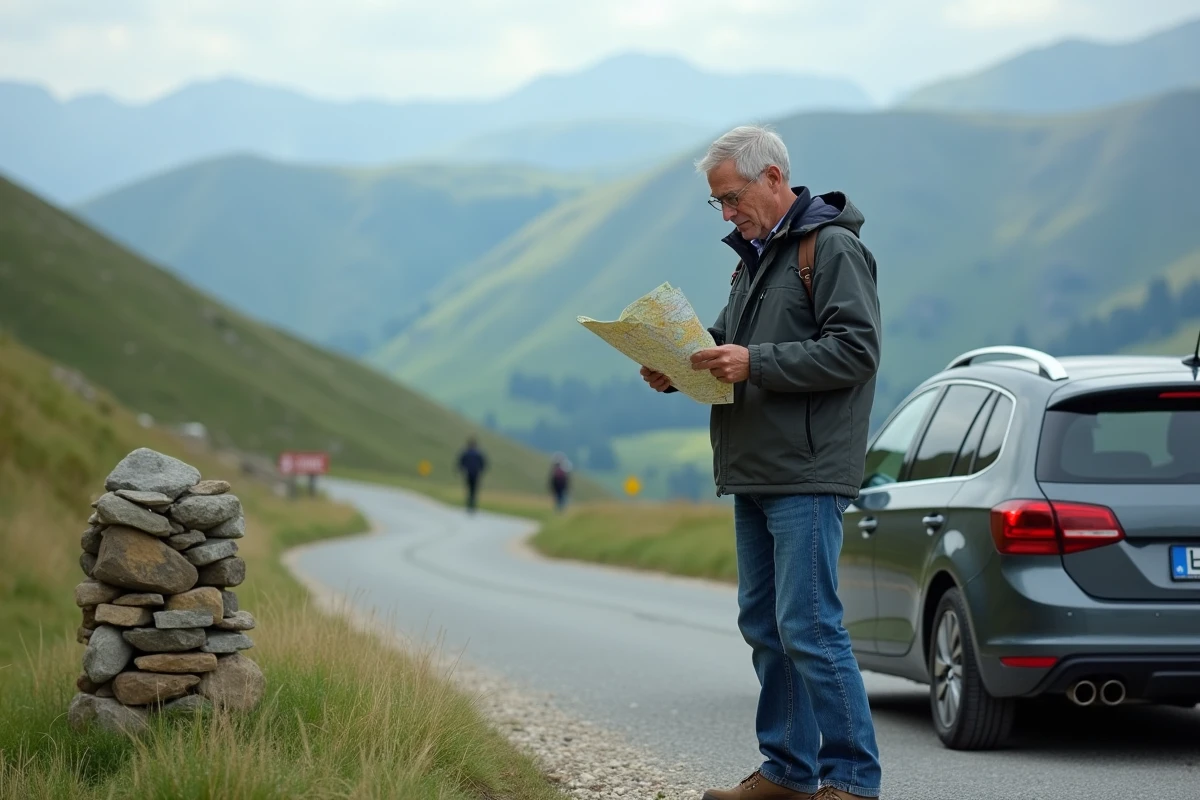
200 kilometers as the crow flies, but a handful of mountain passes, steep valleys, and a scent of adventure: the nearest Spanish border to Pau does not reveal itself without detours. From the Béarnaise capital, the road leads towards the peaks, stretching between villages and secret passages, renewing at every turn the millennia-old dialogue between France and Spain.
Where is the most accessible Spanish border from Pau?
To reach Spain from Pau, geography imposes its laws. The nearest Spanish border to Pau stretches to the west, where the Pyrénées-Atlantiques draw a dividing line between Béarn and the Basque Country. Leaving Pau, the most direct route leads to Saint-Jean-Pied-de-Port, a bastion for pilgrims of Santiago de Compostela, before ascending towards the Pyrenean passes that open the door to neighboring Navarre. This route, marked by centuries of comings and goings, remains the favorite passage to reach Irun, the first Spanish city served by rail.
One name immediately comes to mind: Hendaye. The town, nestled against the Bidassoa, serves as a link between the two countries. Pau is connected to it via Bayonne by the TER, ending in Hendaye, the French terminus. Between Hendaye and Irun, only the width of a bridge separates the two stations. Here, continuity is total: getting on a train in Pau can be enough to find oneself, a few hours later, in Spain, ready to continue to San Sebastián, Pamplona, or Bilbao.
To reach the border, several options are available depending on your preferences and constraints:
- Take the regional TER to Bayonne, then transfer to Hendaye.
- Opt for a long-distance bus from Pau, stopping in Bayonne or Biarritz.
- Share a carpooling trip connecting Pau, Bayonne, and Hendaye.
A more discreet alternative exists: Saint-Jean-Pied-de-Port, a beloved passage for pilgrims. The TER connects Bayonne to this small town, the last French stop before crossing to the Spanish side. From there, the nearest Spanish border to Pau opens up to Irun or San Sebastián. To explore routes and border towns in more detail, the page “Spanish city near Pau: location and border destinations – Aller Retour” gathers all the useful information.
Journey from Pau to Anzánigo: distances, duration, and transport options
Traveling from Pau to Anzánigo requires a bit of tenacity. Between the Béarnaise prefecture and this village in Aragon, there are over 250 kilometers of winding roads that cross the Pyrenees before plunging into the province of Huesca. Expect to spend between 4.5 and 6 hours depending on connections and the chosen mode of transport. Direct links are rare, and one must deal with schedules, train changes, and sometimes the patience of the seasoned traveler.
The first step is to leave Pau heading towards Bayonne or Hendaye via the TER Nouvelle-Aquitaine network. From Bayonne, several lines head towards the Basque border. In Hendaye, the border station, one crosses into Spain via Irun. Then, the RENFE network takes over, connecting Irun to Zaragoza and Huesca. To reach Anzánigo, a rural stop on the Zaragoza-Canfranc line, one often has to change at Huesca.
Here’s how the main routes are structured:
- TER train from Pau to Bayonne, then train to Hendaye.
- Euskotren regional train between Hendaye, Irun, and San Sebastián, then long-distance RENFE train to Huesca.
- From Huesca, regional train to Anzánigo.
The long-distance bus complements the system, particularly for reaching the major cities in northern Spain. Carpooling and private solutions (taxi, shuttle) facilitate the last kilometers, especially during off-peak hours, a favored option for walkers or hurried travelers. This Pau–Anzánigo route reveals the complexity of the Pyrenean fabric, but also the diversity of solutions for those who enjoy building their own path.

Practical tips and tricks for traveling smoothly to Spain from Pau
Crossing the Spanish border from Pau relies on organization. Between TER, buses, private shuttles, and carpooling, one sometimes has to juggle schedules, especially during peak times, school holidays, or the rush to Saint-Jean-Pied-de-Port. For the most popular routes, booking your TER ticket in advance, especially to Bayonne or Hendaye, guarantees a seat and avoids unpleasant surprises, particularly on the Basque Country lines.
Before leaving, always check the schedules and frequency of regional trains, as well as cross-border connections. At the Franco-Spanish border, between Hendaye and Irun, it is not uncommon to have to change platforms or trains. Travelers heading to San Sebastián or Pamplona from France benefit from regular service, but punctuality varies depending on the season and the condition of the lines. As for those heading to Saint-Jean-Pied-de-Port, taxis and private shuttles are invaluable for departures or arrivals outside regular hours.
Remember to keep a versatile payment method: in rural stations, credit cards are not always accepted, and machines may sometimes be lacking. The good news on the technical side: no adapter is needed, as electrical outlets are the same on both sides of the border. Travel light as much as possible: regional trains and buses offer variable comfort and little space for luggage. Finally, for those who want to stay in control of their schedule, carpooling remains a flexible and friendly option to cross the Pyrénées-Atlantiques, share costs, and exchange a few border-crossing stories.
From the platform in Pau to the paths of Aragon, each journey to Spain creates an unexpected interlude, where the route sometimes matters as much as the destination.